
India's computer software and services exports registered a growth of 28 per cent in 2001-02 at $7.652 billion despite a series of negative developments.

A meeting of the Board of Trade, an advisory body to the Commerce Ministry, is likely to be held on October 11, a ministry official said.

The labour-intensive sector contributes about 15 per cent of the country's overall exports.
Exports of computer software and services is likely to post a 29 per cent growth and reach close to Rs 100,000 crore
The exports of gems and jewellery during the first quarter ended June 30, 2003 showed only a marginal rise of 3.85 per cent at $1,880.45 million as against $1,810.78 million during the corresponding period last year.

'We will be able to anticipate the full picture of the impact after August, which is also the time when demand for a year begins to peak ahead of the December holidays and Valentine's Day.'
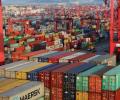
After the first quarter was washed out, exporters are now keeping their fingers crossed over a turnaround in outbound shipments to at least North America from September onwards. This comes even as other key destinations such as Europe may take longer to revive in FY24. Slowdown in key economies, as well as geopolitical tensions resulted in sluggish demand for Indian goods.
India's electronic hardware and computer software services registered a growth of 35 per cent in dollar terms at $6.5 billion during the first half (April-September) of the current fiscal.

Exports of cut and polished diamonds during April-May witnessed a 77.42 per cent decline, gold jewellery exports declined 92 per cent and shipments of coloured gemstones also dipped 92.90 per cent.

During 2012-13, the gems and jewellery exports declined by 9.4 per cent year-on-year to $39 billion due to sluggish demand in traditional markets.
India's exports grew by 67.39 per cent to $32.21 billion in May driven by healthy growth in sectors such as engineering, pharmaceuticals, petroleum products and chemicals, according government data released on Wednesday. Exports in May last year stood at $19.24 billion and in May 2019 it was at $29.85 billion, the commerce ministry's preliminary data showed. Imports in May rose by 68.54 per cent to $38.53 billion, from $22.86 billion in May 2020. In May 2019, imports stood at $46.68 billion.

According to an industry expert, companies such as Trident, Welspun India, Arvind, KPR Mill, Vardhman Textiles, Page Industries, Raymond, and Alok Industries stand to gain, as revenue from the US market accounts for 20-60 per cent of their earnings.

After reports of contamination in cough syrups sent from the country, India is considering a system to test them before exporting. It is learnt that the Central Drugs Standard Control Organisation (CDSCO) has sent a proposal to the Union health ministry on this. The idea is to test the medicines at government labs before exporting.

Subdued demand from developed countries and blocs like the US and EU is impacting exports of key sectors including engineering, gems and jewellery and may have implications on India's exports in case the global situation does not improve in coming months. Global inflation, Russia-Ukraine war, simmering China-Taiwan crisis and supply disruptions are hurting economic growth worldwide, leading to poor demand, experts say. The world merchandise trade volume is expected to grow 3 per cent in 2022 against the earlier forecast of 4.7 per cent, mainly due to the ongoing war between Russia and Ukraine, according to the World Trade Organization forecast, released in April.

Buyers from 19 countries participated and showed interest in sourcing from India.

The steep depreciation of rupee will not give an immediate advantage to the country's exporters.

With Kabul falling into the hands of the Taliban, bilateral trade between Afghanistan and India will get impacted significantly in these uncertain times, according to exporters. Federation of Indian Export Organisations (FIEO) director general Ajay Sahai said domestic exporters should follow caution looking into the political development in Afghanistan, particularly with regard to payments, for which adequate credit insurance may be availed by them. "The trade will be impacted. It would reduce due to the growing uncertainty in Afghanistan," he said on Monday. Former FIEO president and country's leading exporter S K Saraf too said there will be a significant fall in the bilateral trade.

In India 24-carat gold is used mostly in coins and bars
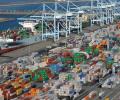
India's exports contracted 12.2 per cent to $34.48 billion in December 2022, mainly due to global headwinds, and the trade deficit widened to $23.76 billion during the same period, according to official data released on Monday. Imports in December 2022 also declined 3.5 per cent to $58.24 billion as against $60.33 billion in the year-ago period. In December 2021, exports stood at $39.27 billion and the trade deficit was at $21.06 billion.
Exporters on Thursday demanded fiscal incentives, tweaking in customs duties on certain products and credit at affordable rates in the forthcoming Budget to boost exports and create jobs. In a pre-budget virtual meeting with Finance Minister Nirmala Sitharaman, the Federation of Indian Export Organisations (FIEO) said the depreciation of the rupee against the US dollar is affecting exports' competitiveness and the sector requires more support. "Creation of employment is the biggest challenge faced by the country...We would urge the government to provide fiscal support to units which provide additional employment in the export sector," the exporter's body said.

'That combination of a rising economy, a growing middle class, and a deepening love of diamonds and jewellery is what we see really doubling the market for diamonds over the next five years.'
Uncertainty looms over India's export outlook, with the new Covid-19 variant Omicron spreading rapidly across the country's key shipment destinations. With the US and parts of Europe witnessing more than 100,000 Covid-19 cases a day, exporters expect some disruption. However, there may not be an immediate decline in exports from India because the order books remain strong at least for the next few weeks, they said.

India has been on an FTA-signing spree of late. Since 2021, it has signed eight trade agreements, three of which -- with the UK, Oman and New Zealand -- were finalised in 2025 alone.

The Russian currency depreciated by 24 per cent in the past month to trade at 56.54 to the dollar at present, a sharp recovery after hitting a low of 68 in early December.

Work on a dozen decisions to start by next week.
India's exports contracted by 22 per cent, the steepest decline in the last three years, to $32.97 billion in June on account of global demand slowdown, especially in the Western markets like the US and Europe. According to the data of the commerce ministry, the trade deficit in June stood at $20.3 billion against $22.07 billion in the same month last year due to a fall in exports and imports. The inbound shipments during the month under review declined by a steep 17.48 per cent to $53.10 billion.

Import segments which recorded negative growth include gold, silver, transport equipment, coal, fertiliser, machinery and machine tools. However, exports of oil seeds, coffee, rice, tobacco, spices, pharma, and chemicals reported positive growth in June.

Indian drugmakers supply 47 per cent of the generic medicine requirements in the US, and tariffs would have increased prices in the US domestic market for patients, who are already dealing with drug shortages.

Prime Minister Narendra Modi had asked exporters to prepare a strategy for the next five years and start working in that direction.

The government has decided to postpone the release of the new Foreign Trade Policy (FTP) and extend the existing one by six months on account of global uncertainties and currency fluctuations. The government was scheduled to announce the new FTP by the end of September. The current policy was to end on September 30.
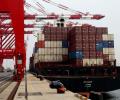
Economic recovery from the pandemic in the US has helped India achieve the $400-billion mark for exports for the first time in any fiscal year. According to the preliminary data compiled by the Department of Commerce, India exported goods worth $73 billion to the US from April 1 to March 21 - up 47 per cent, compared to last year. The US' share of exports, compared to total exports, stood at 18.2 per cent. The country is also India's largest trading partner and export destination.

Backed by the China-plus-one policy, India's textile and apparel exports have seen a 53 per cent growth during the April-November period of the current fiscal year at around $26 billion. This compares to the figure of $17 billion during the same period in FY21. According to Wazir Textile Index, all major companies including Welspun, Vardhman, Trident, KPR Mills, Indo Count, RSWM, Filatex, Nahar Spg and Indorama have posted higher sales during the first half of the current fiscal year compared to the pre-pandemic year.

'We have to be prepared for the larger disruption that is likely to take place.'
According to Ajai Sahai, director-general and CEO of Federation of Indian Export Organisations, rising cases are a cause for concern as it adds to the uncertainty and may impact exports.

Even as the industrial cycle has ground to a halt during the 21-day lockdown, the industry has been hit hard by foreign orders from major clients in the US and Europe being cancelled. Also, a sudden lack of labour has crippled the sector because of a mass exodus of workers from industrial units to the hinterland.
Ranbaxy, Dr Reddy's and other Indian drug makers may cut production as overseas buyers, hurt by the credit crunch, defer export orders. The move could also lower the country's drug exports by at least 10 per cent in the year ending March 2010, industry experts say."Many of our members have been intimated by their importers to stop shipments until further notice," said Venkat Jasti, chairman, Pharmaceutical Exports Promotion Council.
